
China Governance Lab > Graduate Fellows > Book Review
Book Review
Dictating the Agenda: The Authoritarian Resurgence in World Politics
Authors: Alexander Cooley and Alexander Dukalskis
Review by Alireza "Mani" Nouri
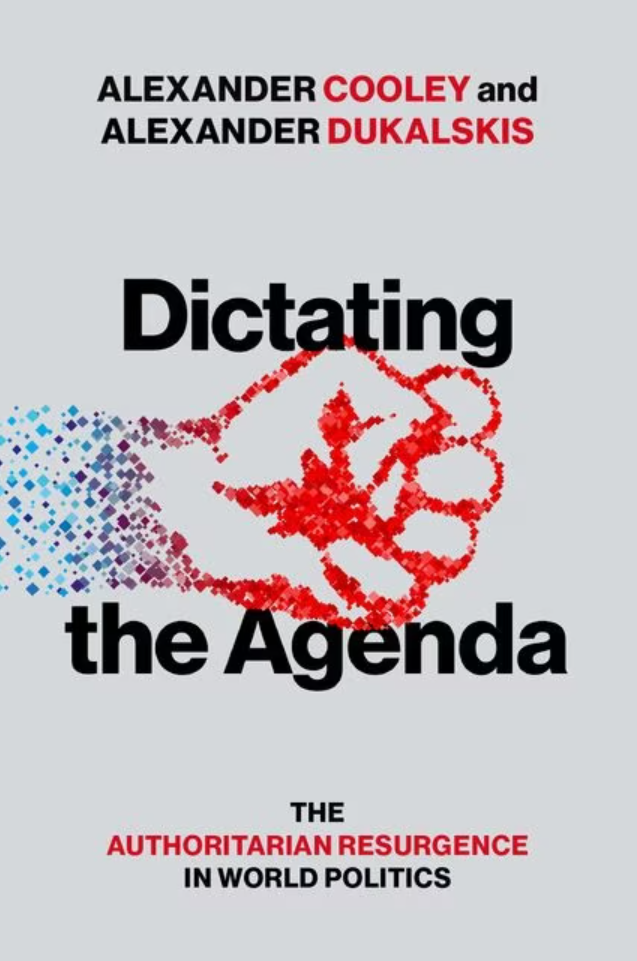
In Dictating the Agenda, Alexander Cooley and Alexander Dukalskis examine the dramatic shift from the post-Cold War era of "liberal triumphalism" to a global order where authoritarian states are increasingly on the offensive. They capture this shift through the book’s core framework of "authoritarian snapback," a five-stage pathway - stigmatizing, shielding, reframing, projecting outward, and finally, dictating the agenda - that maps how regimes evolve from defensive measures at home to actively reshaping global norms abroad.
The authors argue that contemporary authoritarians do not simply block liberal ideas. More ambitiously, they repurpose the very infrastructure of liberal openness, including media, higher education, and international sports, to advance illiberal goals. They show how states such as China and Russia have learned from one another’s playbooks and capitalize on global interconnectedness. The result is not a series of isolated pushbacks, but a coordinated strategy born of growing capacity, confidence, and transnational learning.
Our graduate fellow, Alireza “Mani” Nouri, spoke with the authors, Alexander Cooley and Alexander Dukalskis, about their book. Here are their conversations:
1. You come from complementary regional expertise—Alexander Cooley on Eurasia/Central Asia and Alexander Dukalskis on Asian politics. How did that shape your collaboration? As you compared Russia and China, did their ‘playbooks’ converge more than you expected, or did key regional differences force you to revise the snapback theory?
Alex Dukalskis (AD): From a biographical standpoint, I came up in graduate school studying North Korea and the Burmese military junta. I remember people saying these were old anachronistic forms of rule, questioning what I was doing wasting my time studying these things. Now, all of these modes of rule are back, and it's interesting to see the world move closer to those norms.
In terms of our collaboration, I was personally struck by many similarities shared by authoritarian states, and that's how we came to this snapback model. Of course, Russia and China differ in all kinds of ways, and their political systems domestically differ in so many ways. But they engage in so many similar tactics to not only fend off liberal pressure, but now to insert their norms into the international system.
Alexander Cooley (AC): The key intervening stage that we share is, in our own individual work, we both see the global and transnational connections with these regions. In other words, neither of us is a classical area studies scholar who views the region as all about the local. For us, the region is about the global. The global sphere is key to regional identities and national identities.
2. In the book, you describe a shift from the “liberal triumphalism” of the 1990s to the current “authoritarian snapback”. Was there a specific event or turning point (e.g., around the 2008 financial crisis) when you realize this wasn’t isolated backlash, but a coordinated global strategy?
AC: It wasn’t a single “spark.” What we call “authoritarian snapback” took shape through several inflection points in the mid-2000s. The 2003 Iraq invasion helped discredit democracy promotion “by force” and fueled backlash. The 2008 financial crisis then undercut the perceived legitimacy of the Western economic model – and the policy agenda tied to it.
The Beijing Olympics mattered too, but in a particular way. They were awarded during peak liberal optimism, when many assumed that deeper integration would socialize China into liberal norms. In the run-up, a real “monitoring” ecosystem formed: groups like Amnesty International and Human Rights Watch, the International Olympics Committee’s briefings, and advocacy campaigns that used the Games to spotlight rights issues - from displacement to Tibet and free expression. The Olympics became a lightning rod (torch-relay protests, Tibet, Darfur, press freedom, uncensored internet), and while China made some concessions, the bigger story was what came after.
In hindsight, Chinese authorities felt the Games delivered exactly what they wanted to avoid – being “named and shamed,” losing control of the narrative to foreign media, and empowering transnational liberal scrutiny. That post-2008 lesson, “we’re not doing that again,” was pivotal, and it helped push the strategy in the opposite direction.
AD: In China’s case, the Tibet-related protests and Beijing’s reaction to them were widely described as a “shock to the system” and a “wake-up call,” especially because the Party felt it had lost control of the global narrative. That experience helped motivate a major investment in external-facing state media and broader efforts to shape international public opinion. Importantly, many of these initiatives began before Xi Jinping, during the Hu Jintao era, and were later expanded. These resources make it easier to innovate, sustain messaging without commercial pressures, and project narratives globally in ways that profit-driven media systems often cannot.
3. In Chapter 3, you trace how the International Olympics Committee moved from framing the 2008 Beijing Olympics as an opportunity to encourage human rights improvement to asserting in 2022 that it had “no mandate” to influence domestic law. How do you interpret this shift?
AD: By 2022, institutions had effectively learned to “institutionalize neutrality” as a form of self-protection. But it’s not only learning; it’s also power. China not only absorbed lessons from 2008, it also recognized it had more leverage than it did in the earlier period. Knowing years in advance that the Winter Olympics were coming, Beijing was able to parry boycott pressure more effectively, handle information control in a more sophisticated way, and use greater market power and political heft to push actors into compliance.
4. How do you make the “snapback” framework travel across China’s leverage-heavy approach and Russia’s increasingly coercive “iron fist”? Are these just different tools within the same model, or does reliance on force signal a breakdown or limit of snapback?
AC: We need to be careful about simply ascribing static labels to both states, but there are clear differences in their power capabilities. Russia has undergone a real evolution; in the early and mid-2000s, they tried to offer "public goods" and loans to countries like Iceland, Cyprus, and Kyrgyzstan in exchange for influence and basing rights. However, they ran into the problem that they simply did not have enough money to buy countries off in that aggressive way, and the outcomes were not great.
Consequently, the Russians rationally shifted to low-cost, effective tools – private security outreach (like the Wagner Group) for global regime security missions, sophisticated information and disinformation operations, and messaging that articulates the "double standards" and "hypocrisy" of the liberal world order.
China, by contrast, has the actual capability for a global investment and aid plan. While both China and Russia rely on different tools, they both invest heavily in global state media because they understand the importance of messaging, even if it means taking a financial loss.
AD: Regarding the "Iron Fist," China uses different means of exerting and expanding control. A prime example is how they were able to essentially tame the global financial center of Hong Kong without firing a shot. China’s leverage is primarily economic, but it is also based on the ability to exert political control.
Furthermore, analysts often underestimate cooperation between China and Russia. When we saw the "no-limits friendship" announced in February 2022, many focused only on the disagreements and limits. But we shouldn't assume their different styles will lead to a clash. In regions like Central Asia, they use crises as an opportunity to work out their mutual accommodation and coexistence.
5. In the conclusion, you warn against democracies fighting snapback with authoritarian methods. But since authoritarians exploit liberal openness, such as platforms and universities, where’s the line between legitimate defensive regulation and illiberal overreach?
AD: One has to pick battles and not prioritize everything. What strikes me across different fields is that ostensibly liberal actors often don't even try defending liberal rights. In the university sector, which I am very familiar with, when engaging with authoritarian hosts, institutions often don't even try to advance liberal academic freedoms. They just assume because they are entering a market like China, certain topics are off-limits. Oftentimes, they are never even told that explicitly; they just assume and internalize it.
I believe it is worth pushing against authoritarian censorship; you might actually make progress and carve out more genuine partnerships if you stand up for your own values while recognizing there are limits to your success. The first step is to not assume that economic engagement alone will lead to values going out; you have to foreground the values in some ways.
AC: Regarding where to draw the line, I think anytime you ban a mass outlet rather than put guidelines as to what the discourse and rules are, it is an illiberal act. Because we have moved away from being active regulators of platforms, the choice is then reduced to either "allow them" or "ban them". That is a very difficult choice because we are undermining our own principles which comes with implications.
Featured Authors
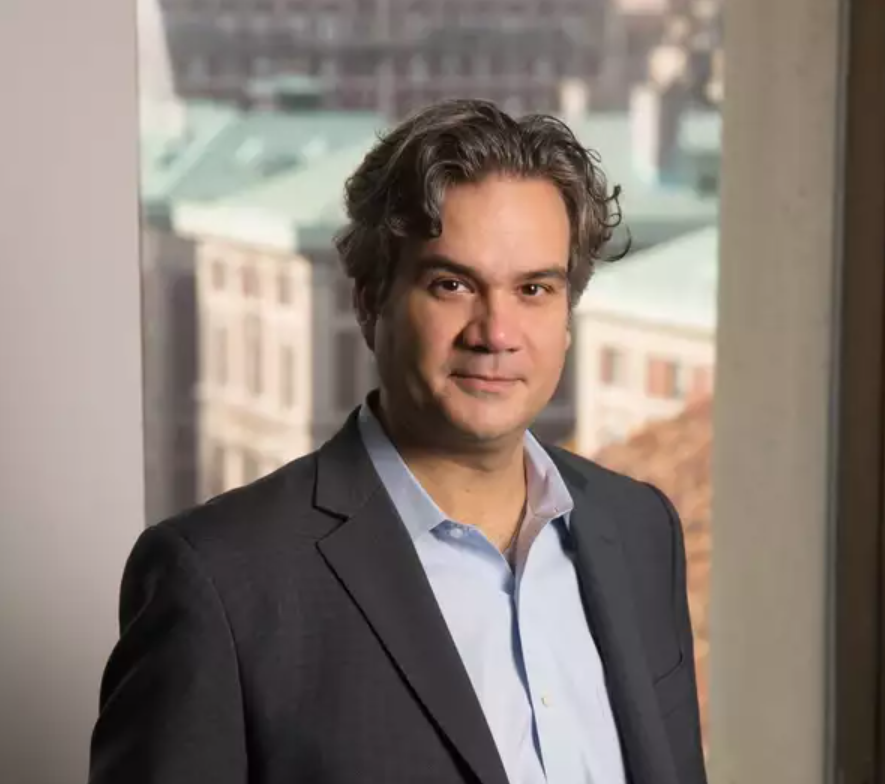
Alexander Cooley
Alexander Cooley is the Claire Tow Professor of Political Science at Barnard College. From 2015 to 2021, he served as the 15th Director of Columbia University’s Harriman Institute for the Study of Russia, Eurasia and Eastern Europe. Professor Cooley’s research examines how external actors—including emerging powers, international organizations, multinational companies, NGOs, and Western enablers of grand corruption—have influenced the development, governance and sovereignty of the former Soviet states, with a focus on Central Asia and the Caucasus.

Alexander Dukalskis
Alexander Dukalskis is associate professor in the School of Politics & International Relations at University College Dublin in Dublin, Ireland. He is the author of three books and several academics articles on the politics of authoritarianism, human rights, and Asian politics. He is also a frequent contributor to national and international media on these themes.