
China Governance Lab > Events
Events Overview
Upcoming Events
SEPT
17
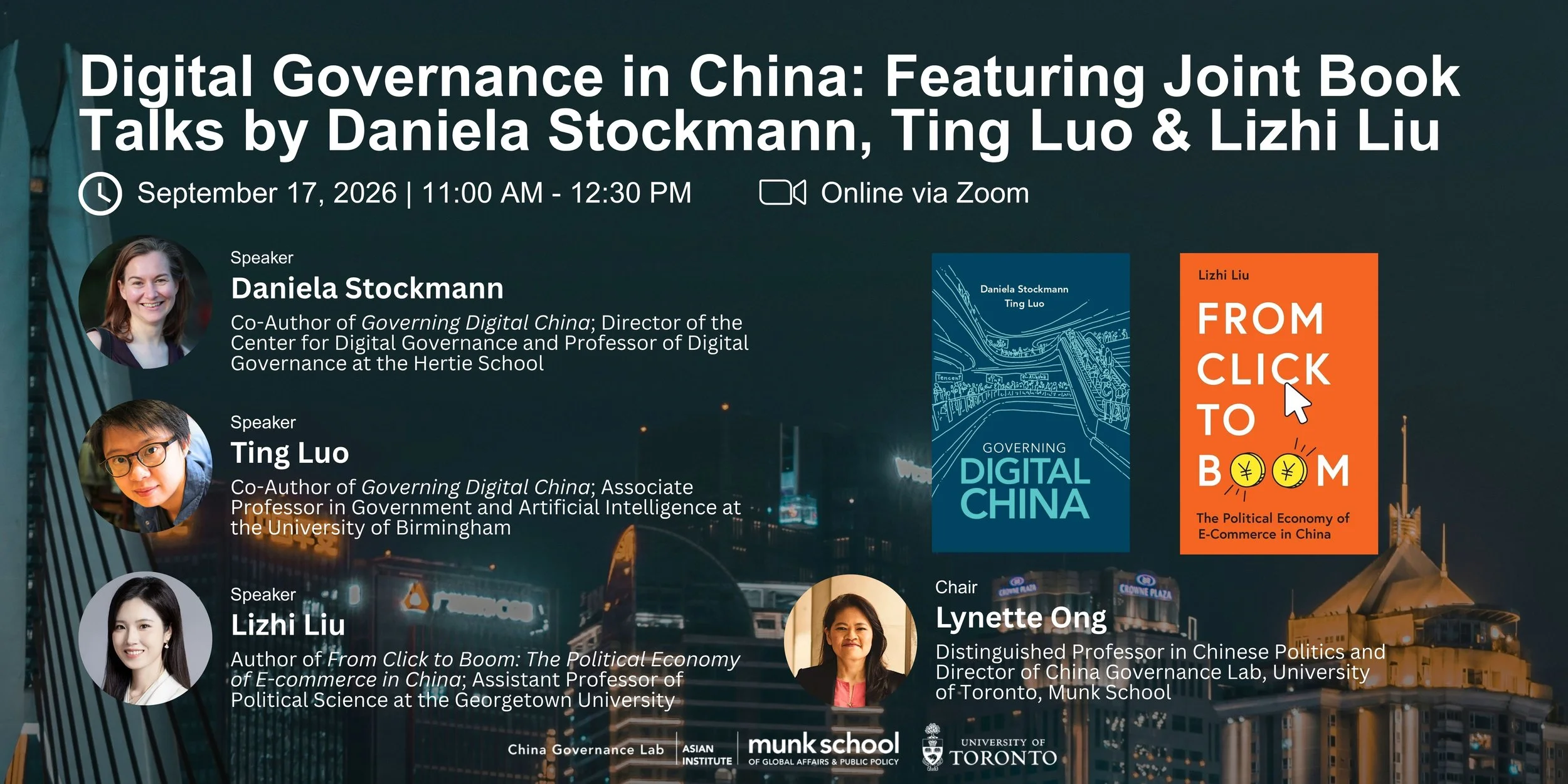
Digital Governance in China: Featuring Joint Book Talks by Daniela Stockmann, Ting Luo & Lizhi Liu
How have digital technologies transformed the relationship between the Chinese state, markets, and society? This joint book talk brings together Professors Daniela Stockmann and Ting Luo, authors of “Governing Digital China”, and Professor Lizhi Liu, author of “From Click to Boom: The Political Economy of E-commerce in China,” to explore these dynamics. Challenging Orwellian “Big Brother” comparisons of China’s digital governance, Stockmann and Luo’s “Governing Digital China” studies the bottom-up influences and how citizens and technology firms have shaped digital rulemaking alongside the state. Meanwhile, Liu’s “From Click to Boom” examines how the Chinese government leveraged digital platforms to outsource institutional development and enforcement. Together, the books offer complementary perspectives on how state institutions, technology companies, and citizens shape China’s rapidly evolving digital landscape.
VIRTUAL
Zoom Webinar
11:00 AM - 12:30 PM
SEPT
21
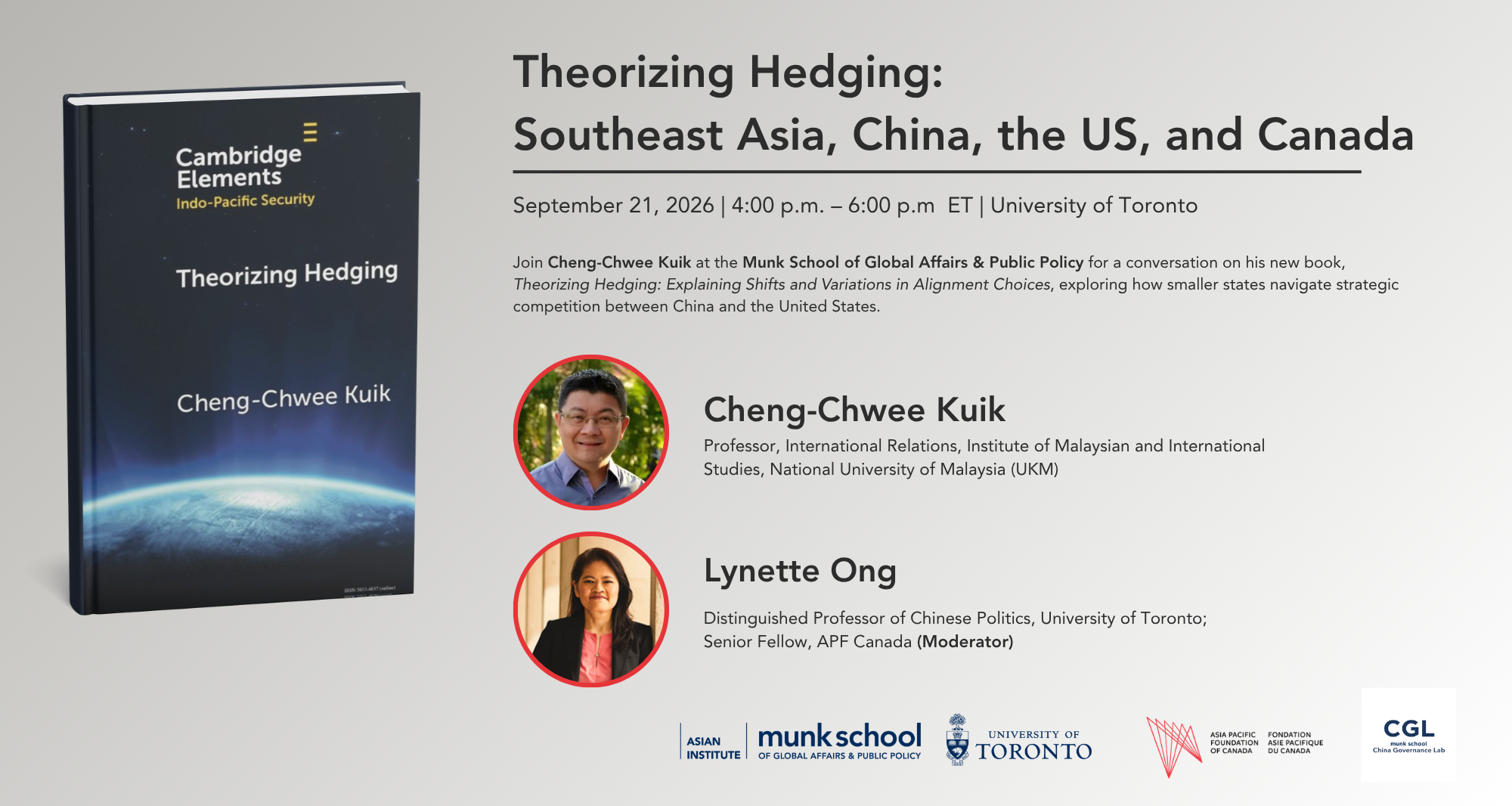
Book Talk - Theorizing Hedging: Southeast Asia, China, the US, and Canada
Join us at the Munk School of Global Affairs and Public Policy for a talk with APF Canada's Indo-Pacific Visiting Scholar Dr. Cheng-Chwee Kuik, Professor of International Relations at the Institute of Malaysian and International Studies, on his new book, Theorizing Hedging: Explaining Shifts and Variations in Alignment Choices (Cambridge University Press, 2026).
Professor Kuik argues that hedging — not balancing or bandwagoning — is the modal behavior of non-great powers navigating high-stakes uncertainty, and offers one of the first theoretical accounts of strategic hedging in world politics. He will explain not only why smaller states hedge, but also why their alignment decisions shift and vary over time.
Professor Kuik will then apply his framework to the current strategic environment, examining how Southeast Asian states are calibrating their relationships with China and the United States, as well as with other middle powers, including Canada.
This event will be moderated by Professor Lynette Ong
IN-PERSON
The Boardroom, Munk School
4:00 PM - 6:00 PM
SEPT
30
Hong Kong: A City of Law
This event is the 9th Bernard H. K. Luk Memorial Lecture in Hong Kong Studies. This year's lecture, titled "Hong Kong: A City of Law," examines the evolving relationship between legal frameworks and societal governance in a rapidly changing global context. Our speaker is Professor Laikwan Pang, the Choh Ming Li Professor of Cultural Studies and Head of the Department of Cultural and Religious Studies at The Chinese University of Hong Kong.
Hong Kong has long been hailed as a city defined by the rule of law. This paper discusses whether recent National Security Laws have altered this fundamental characteristic. In an era dominated by escalating geopolitical tensions, states worldwide increasingly rely on legal mechanisms rather than due political processes to resolve political conflicts. When subjected to such political instrumentalization, the law—traditionally a pillar for fostering trust and facilitating collaboration—risks losing its core purpose. This presentation explores the dynamic relationship between law and society, both in Hong Kong and globally. Although the state often utilizes law as an instrument of governance, the law also plays an indispensable role in safeguarding political pluralism, protecting civil liberties, and ensuring that governance remains accountable to living communities. Ultimately, the challenges facing Hong Kong reflect a broader global trend of systemic state insecurity.
Professor Lynette Ong, Director of China Governance Lab, will be joining this event as a discussant.

IN-PERSON
Richard Charles Lee Hong Kong-Canada Library
3:00 PM - 5:00 PM
Past Events
MAY
7
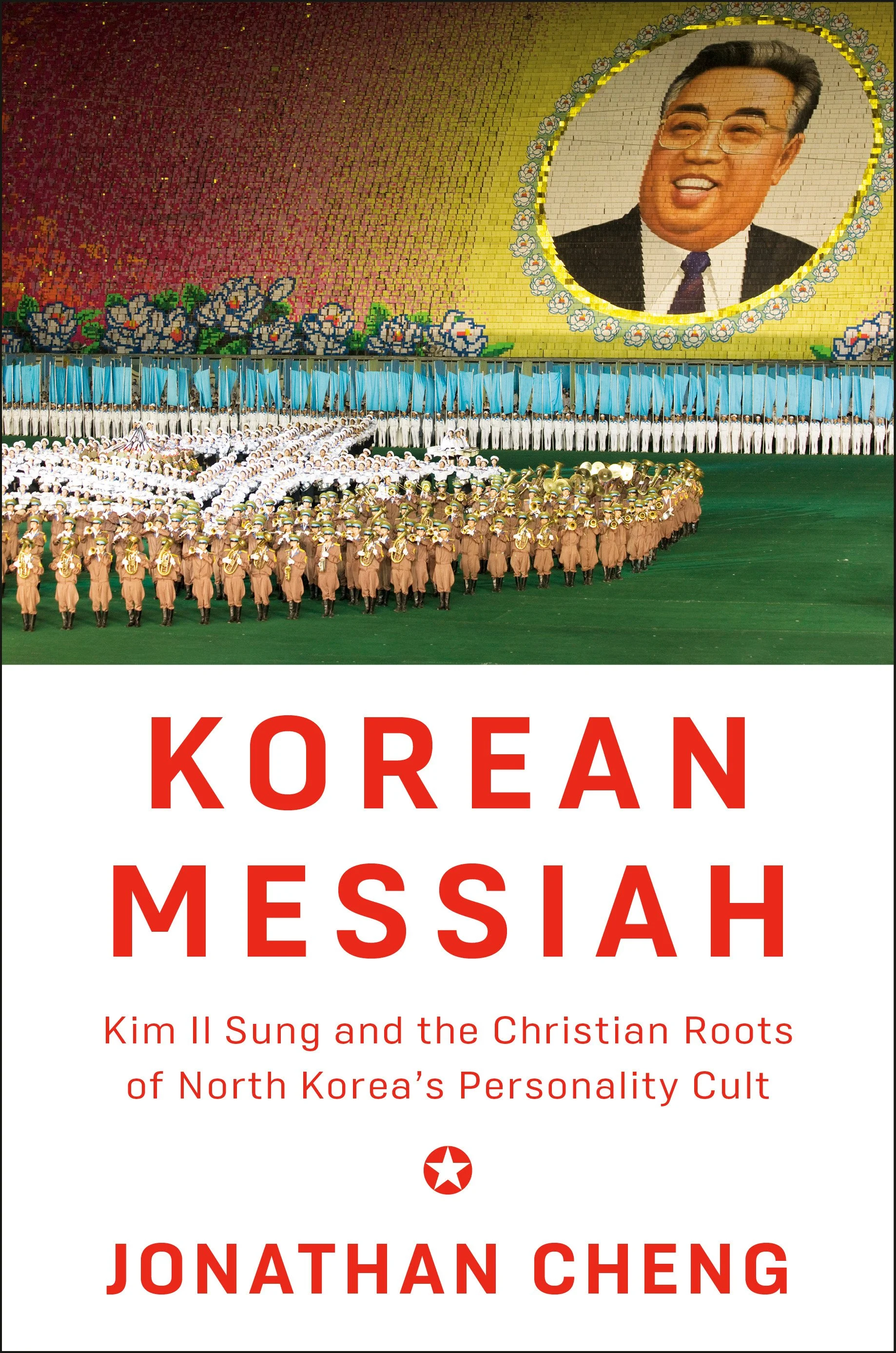
Book Talk - The Korean Messiah
For nearly eight decades, North Korea has marched defiantly to its own beat, shaking off its Soviet and Chinese sponsors to emerge as the world’s most enigmatic nation—a nuclear-armed state ruled by a dictatorial dynasty. Underpinning the state is a personality cult more soaked in religiosity than those constructed by Stalin or Mao—one that traces its roots back to the Christian fervor of post–Civil War America. At the center of this story is North Korea’s founder, Kim Il Sung, son of two fervent Christians and progenitor of an ideology known as Kimilsungism, an exercise in idolatry that has elevated him, and his successor son and grandson, to Christlike status, from the humble manger where he was born to the subway seat on which the venerated leader once placed his posterior, cordoned off as if it were a religious relic.
IN PERSON
Room 208N, North House, 1 Devonshire Place, Toronto, ON M5S 3K7
10:30 AM - 11:30 AM
APR
9
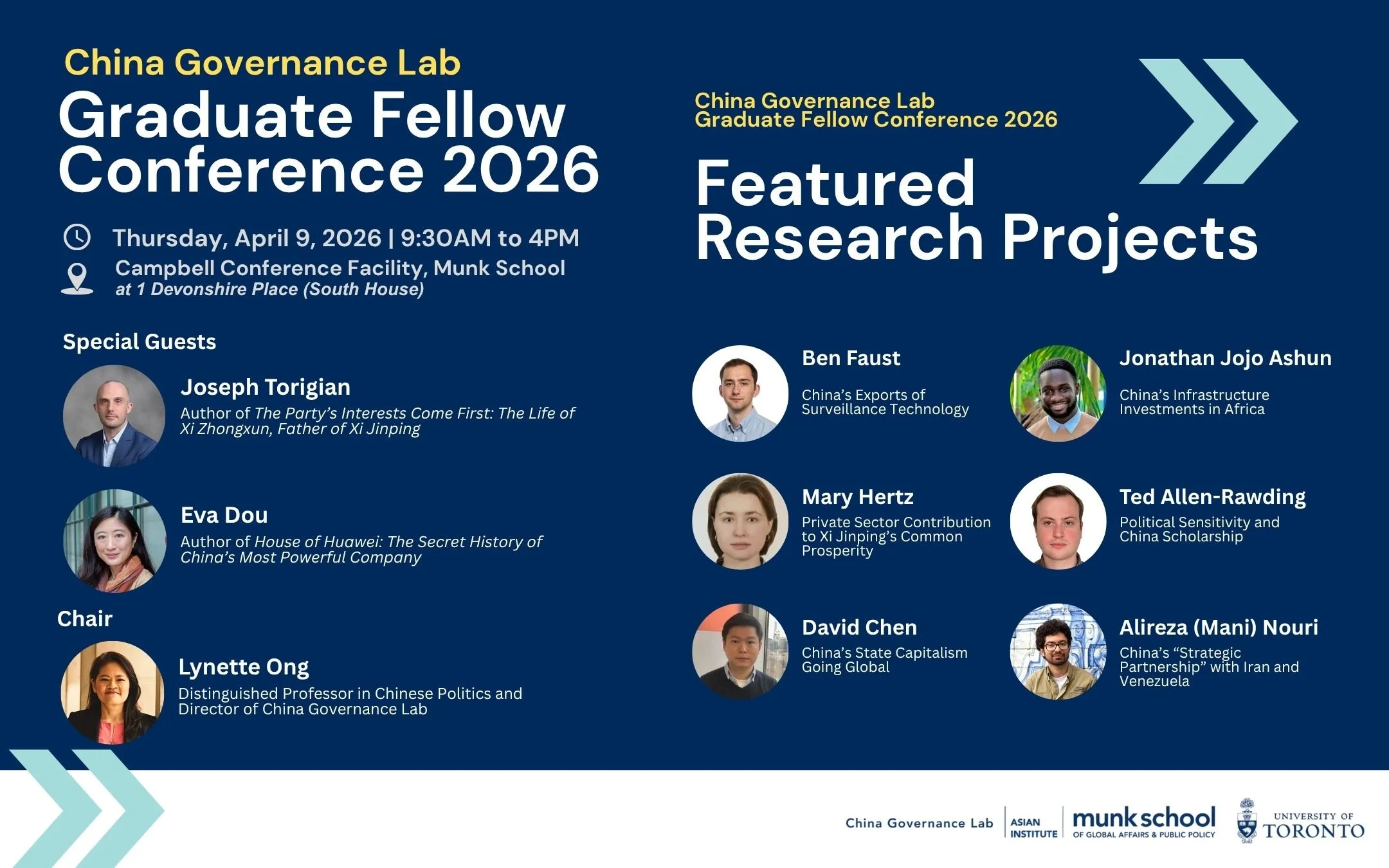
China Governance Lab Graduate Fellow Conference 2026
The 2026 Graduate Fellow Conference of the China Governance Lab will feature research presentations of our six fellows, and two special guest speakers: Joseph Torigian, author of the widely acclaimed The Party’s Interests Come First: The Life of Xi Zhongxun, Father of Xi Jinping (Stanford University Press, 2025), and Eva Dou, author of the illuminating House of Huawei: The Secret History of China’s Most Powerful Company (Portfolio, 2025). This event will be chaired by the Director of China Governance Lab, Professor Lynette Ong
Featured Research Projects
Ben Faust
China’s Exports of Surveillance TechnologyMary Hertz
Private Sector Contribution to Xi Jinping’s Common ProsperityDavid Chen
China’s State Capitalism Going GlobalJonathan Jojo Ashun
China’s Infrastructure Investments in AfricaTed Allen-Rawding
Political Sensitivity and China ScholarshipAlireza (Mani) Nouri
China’s “Strategic Partnership” with Iran and Venezuela
IN PERSON
Campbell Conference Facility, 1 Devonshire Place
9:30 AM - 4:00 PM
FEB
12
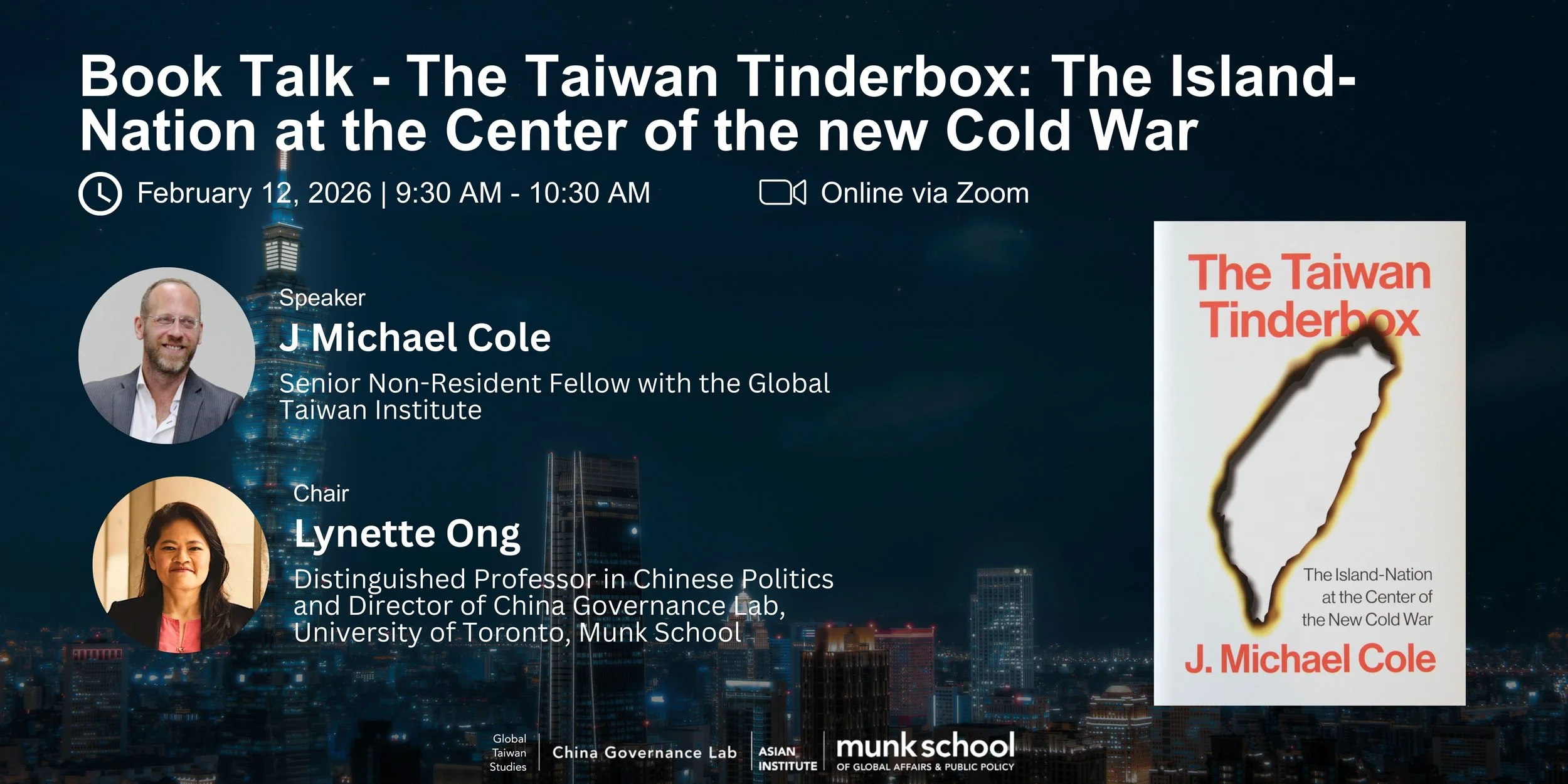
Book Talk - The Taiwan Tinderbox: The Island-Nation at the Center of the new Cold War
Russia's invasion of Ukraine in February 2022 shocked the world and overturned assumptions that large-scale conventional war was inconceivable in the twenty-first century. On the other side of the planet, democratic Taiwan faces the rising threat of a military takeover by China a conflict whose impact on the international community would be catastrophic.
Renowned Taiwan expert and former intelligence officer J. Michael Cole explains how this Pacific nation has become a tinderbox that could ignite a full-scale global conflict. Drawing on unparalleled access to Taiwanese government sources and two decades of on-the-ground observation, he explores the root causes of the conflict between Taiwan and China - from the identity politics that make "peaceful unification" inconceivable, to the rise of Xi Jinping, the most powerful and authoritarian Chinese leader since Mao Zedong. With in-depth analysis of how the war in Europe is influencing preparations by Beijing, Taipei, and Washington for a potential cross-Strait confrontation, The Taiwan Tinderbox is an impassioned plea for the defense of Taiwan as a priority for the international community and the future of democracy.
VIRTUAL
Zoom Webinar
9:30 AM - 10:30 AM
JAN
30
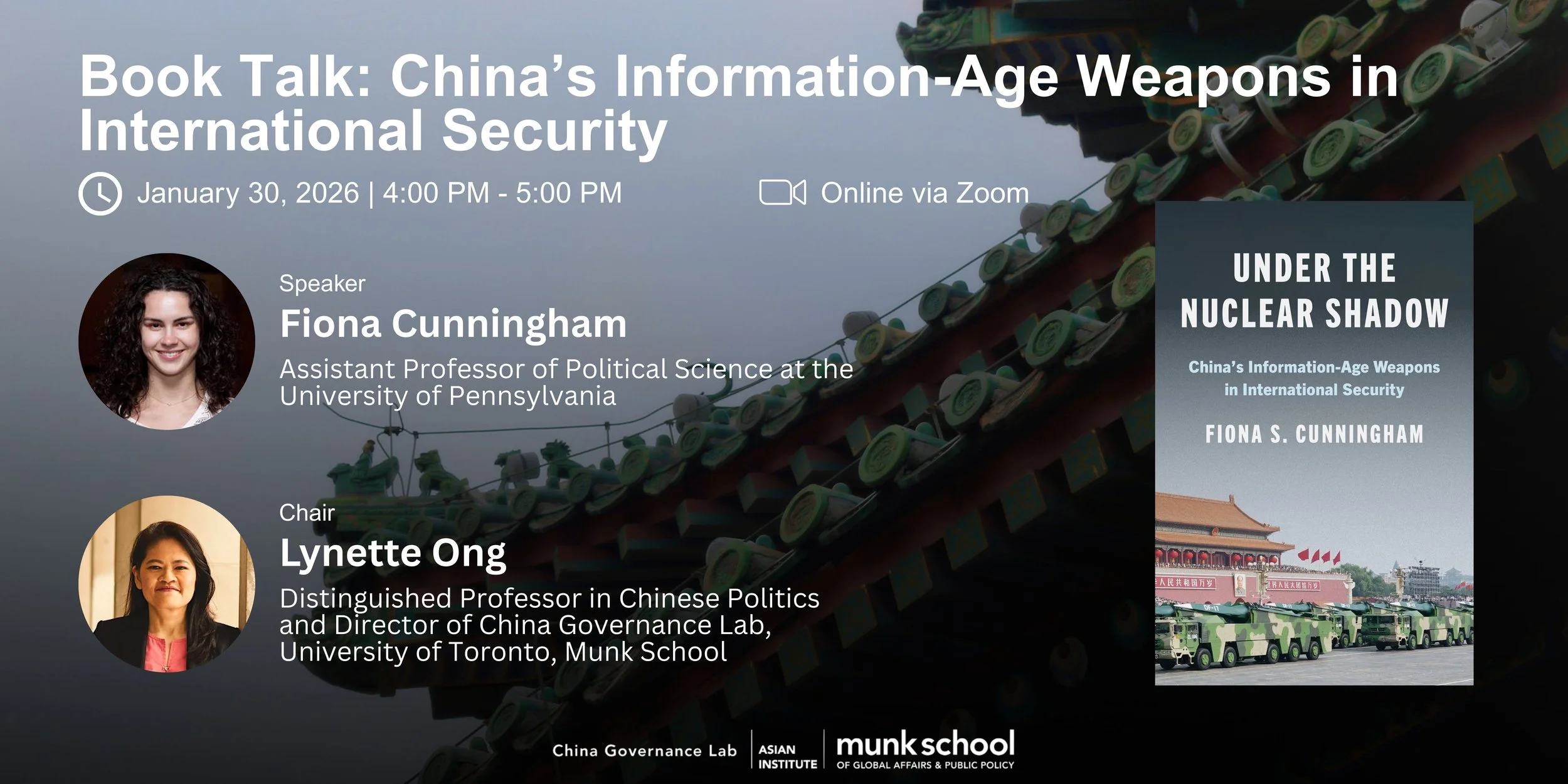
Book Talk - Under the Nuclear Shadow: China’s Information-Age Weapons in International Security
How can states use military force to achieve their political aims without triggering a catastrophic nuclear war? Among the states facing this dilemma of fighting limited wars, only China has given information-age weapons such a prominent role. While other countries have preferred the traditional options of threatening to use nuclear weapons or fielding capabilities for decisive conventional military victories, China has instead chosen to rely on offensive cyber operations, counterspace capabilities, and precision conventional missiles to coerce its adversaries. In Under the Nuclear Shadow, Fiona Cunningham examines this distinctive aspect of China’s post–Cold War deterrence strategy, developing an original theory of “strategic substitution.” When crises with the United States highlighted the inadequacy of China’s existing military capabilities, Cunningham argues, China pursued information-age weapons that promised to rapidly provide credible leverage against adversaries.
VIRTUAL
Zoom Webinar
4:00 PM - 5:00 PM
JAN
9
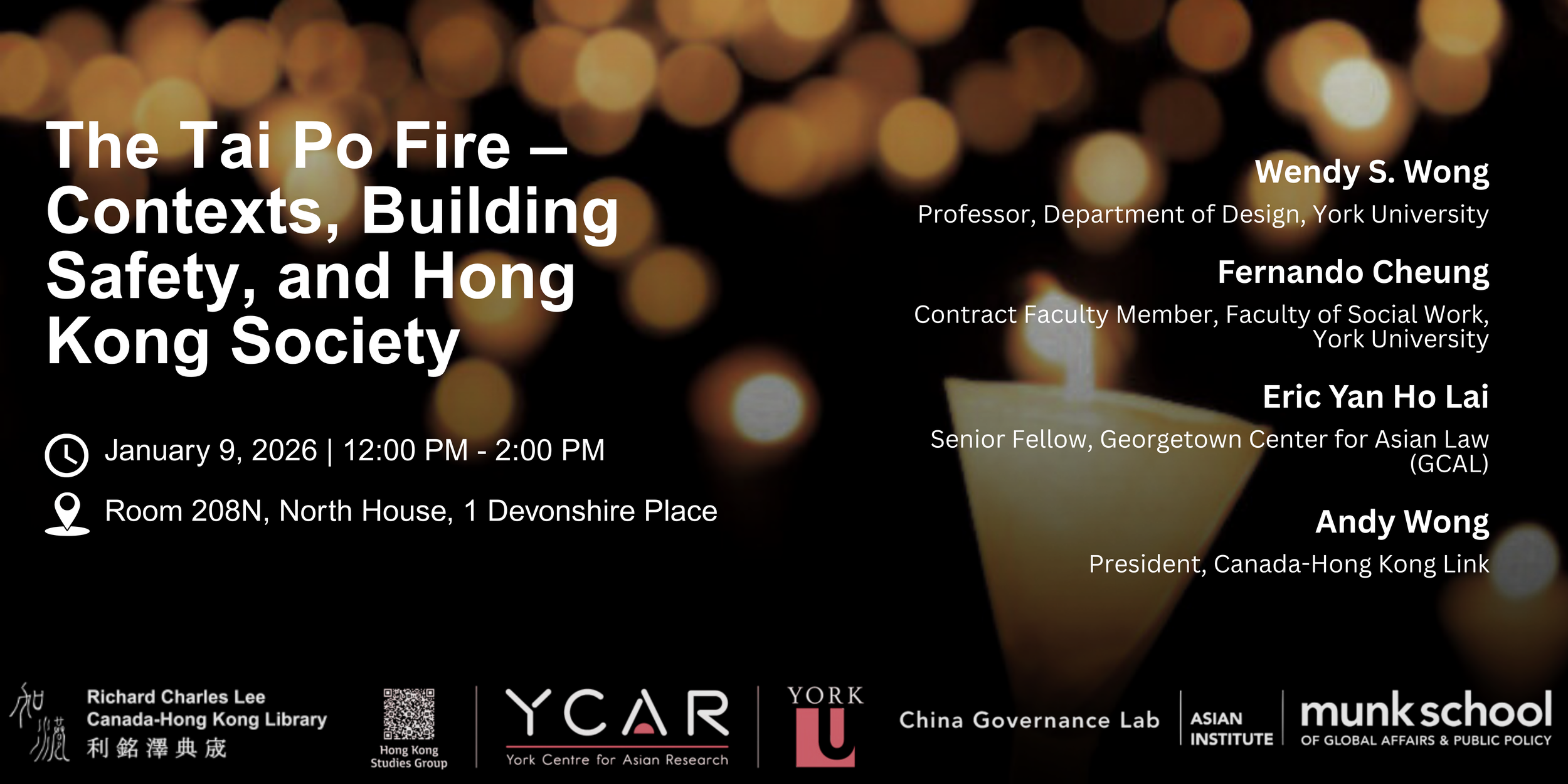
The Tai Po Fire — Contexts, Building Safety, and Hong Kong Society
This event will remember the victims of the tragic event. It features several scholars and experts on Hong Kong to discuss the implications of the tragic event on Hong Kong society, building codes, and how the diaspora community could support the victims.
IN PERSON
Room 208N, North House, 1 Devonshire Place, Toronto, ON, M5S 3K7
12:00PM - 2:00PM
DEC
5
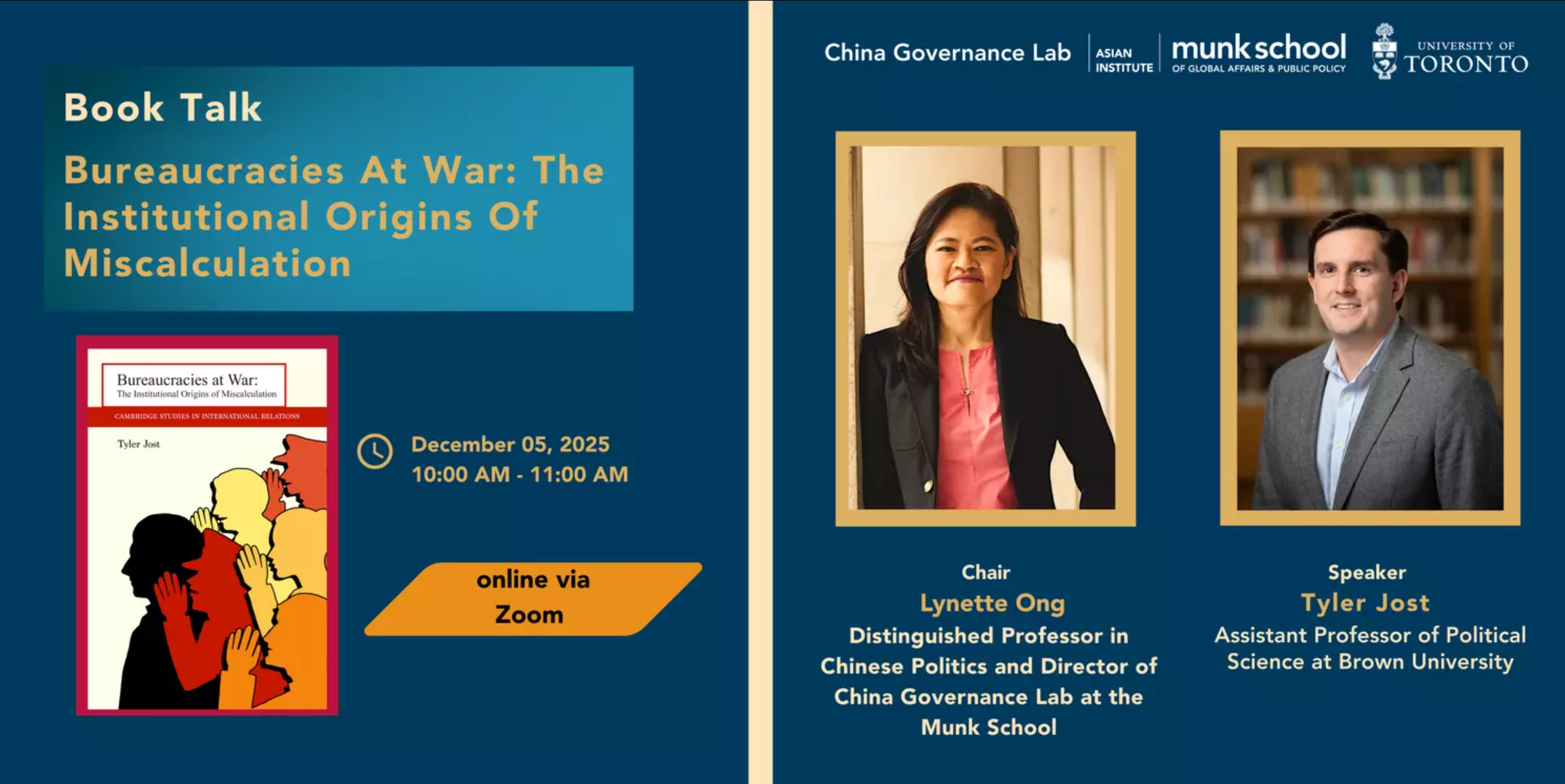
Book Talk - Bureaucracies at War: The Institutional Origins of Miscalculation
Why do states start conflicts they ultimately lose? Why do leaders possess inaccurate expectations of their prospects for victory? Bureaucracies at War examines how national security institutions shape the quality of bureaucratic information upon which leaders base their choice for conflict – which institutional designs provide the best counsel, why those institutions perform better, and why many leaders fail to adopt them. Jost argues that the same institutions that provide the best information also empower the bureaucracy to punish the leader. Thus, miscalculation on the road to war is often the tragic consequence of how leaders resolve the trade-off between good information and political security. Employing an original cross-national data set and detailed explorations of the origins and consequences of institutions inside China, India, Pakistan, and the United States, this book explores why bureaucracy helps to avoid disaster, how bureaucratic competition produces better information, and why institutional design is fundamentally political.
VIRTUAL
Zoom Webinar
10:00 AM - 11:00 AM
NOV
11
Roundtable Discussion - Canada at a Crossroads: Canada-China-US Relations under Carney’s Government
Canada’s foreign relations are at a crossroads. Trump’s re-election has cast tremendous uncertainty over both economic and security partnership to Canada traditionally provided by the US. China that is supposed to provide trade diversification from our overreliance on the US market has proved to be an unreliable trade partner. How should Canada engage or deal with China given the known risks and uncertainty? Should Canada engage with China at all, given its authoritarian nature and record of arbitrary detention? Does these calculation change under Trump 2.0? Can the EU provide a viable alternative to economic diversification and security alliance? Can the Indo-Pacific region provide a counterbalance against potential risks from China? Instead of focusing exclusively on Canada-China bilateral relations, experts from this roundtable will examine these important relations by contextualizing it in the larger context of Canada’s foreign relations with the US, Europe and the Indo-Pacific.

VIRTUAL
Zoom Webinar
2:00 PM - 3:00 PM
OCT
9
Book Talk - The Political Logic of Taxation in China
Rapid social economic changes, the transition from a planned economy to a market economy, or even economic liberalization can lead to political instability and the collapse of authoritarian regimes. Despite experiencing all of these unprecedented changes in the past forty years, China under the Chinese Communist Party’s leadership has so far successfully transformed and improved both its governance capacity and its ruling capacity. Governing and Ruling addresses this regime resilience puzzle by examining the political logic of its taxation system, especially the ways in which taxation helps China handle three governance problems: maneuvering social control, improving agent discipline, and eliciting cooperation. Changdong Zhang argues that a taxation system plays an important role in sustaining authoritarian rule, in China and elsewhere, by combining co-optation and repression functions. The book collects valuable firsthand and secondhand data; studies China’s taxation system, intergovernmental fiscal relationships, composition of fiscal revenue sources, and tax administration; and discusses how each dimension influences the three governance problems.

VIRTUAL
Zoom Webinar
7:00 PM - 8:00 PM
SEPT
22
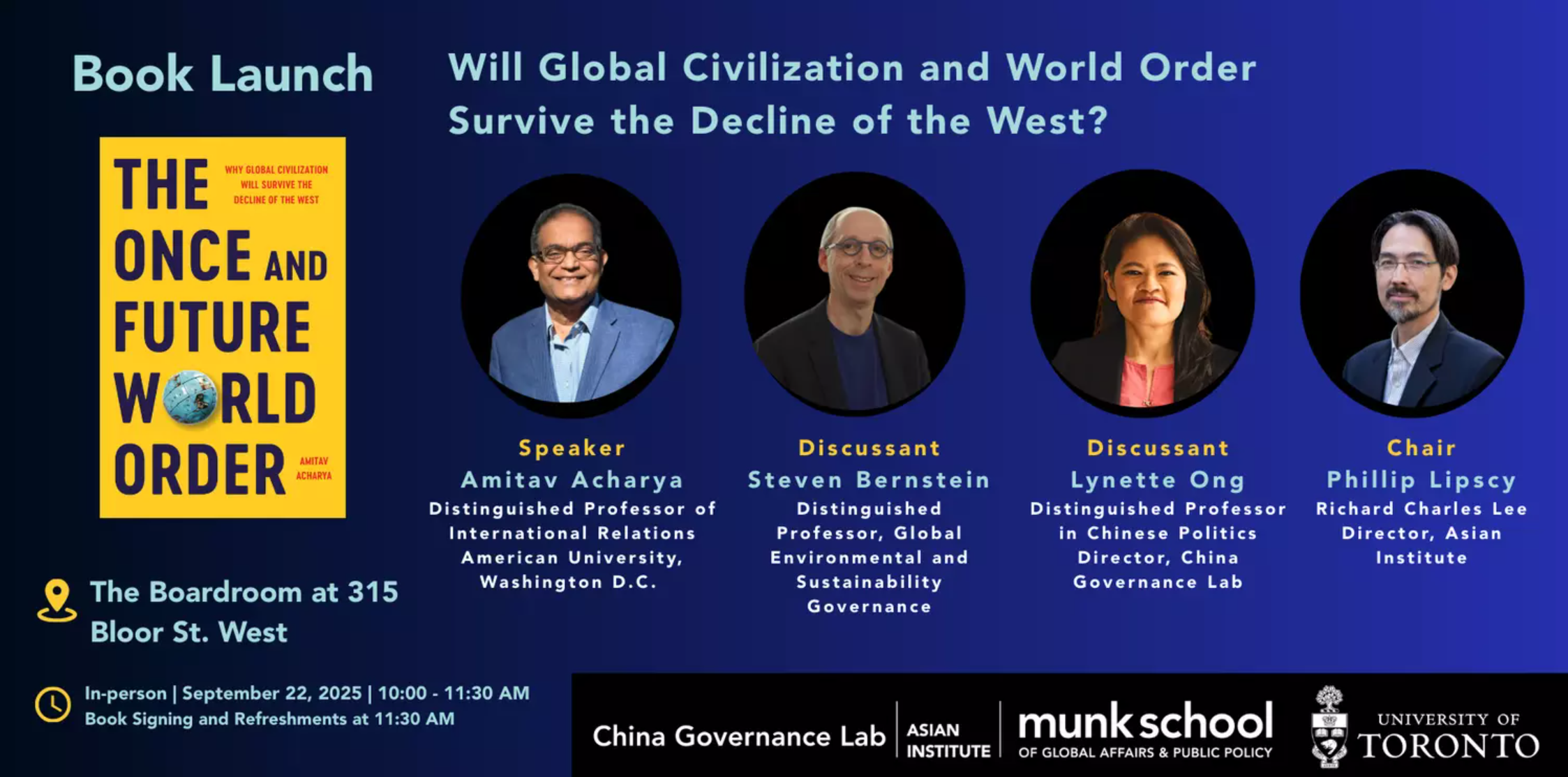
Book Launch - Will Global Civilization and World Order Survive the Decline of the West?
Drawing on his new book covering 5000 years of history, Acharya shows that world order has never been the monopoly of any civilization or nation. Core foundations of world order: empire, independent states, diplomacy, peace treaties, inter-state cooperation, freedom of the seas, open trading systems, and humanitarian values, emerged from multiple locations around the world. Yet, centuries of Western dominance have obscured the ideas and contributions of other civilizations to world order. The future world order, Acharya concludes, will not be shaped by one, two or a handful of great powers, but by a “global multiplex,” with many consequential state and non-state actors and in which diversity and interconnectedness will co-exist. While no world order can be free from conflict, the end of Western dominance need not mean the collapse of civilization or world order. Rather it might help mitigate the West-versus-the-Rest divide, and in the longer term, create the basis for a more inclusive world.
IN PERSON
Munk School (The Observatory) - The Boardroom
7:00 PM - 8:00 PM
SEPT
4
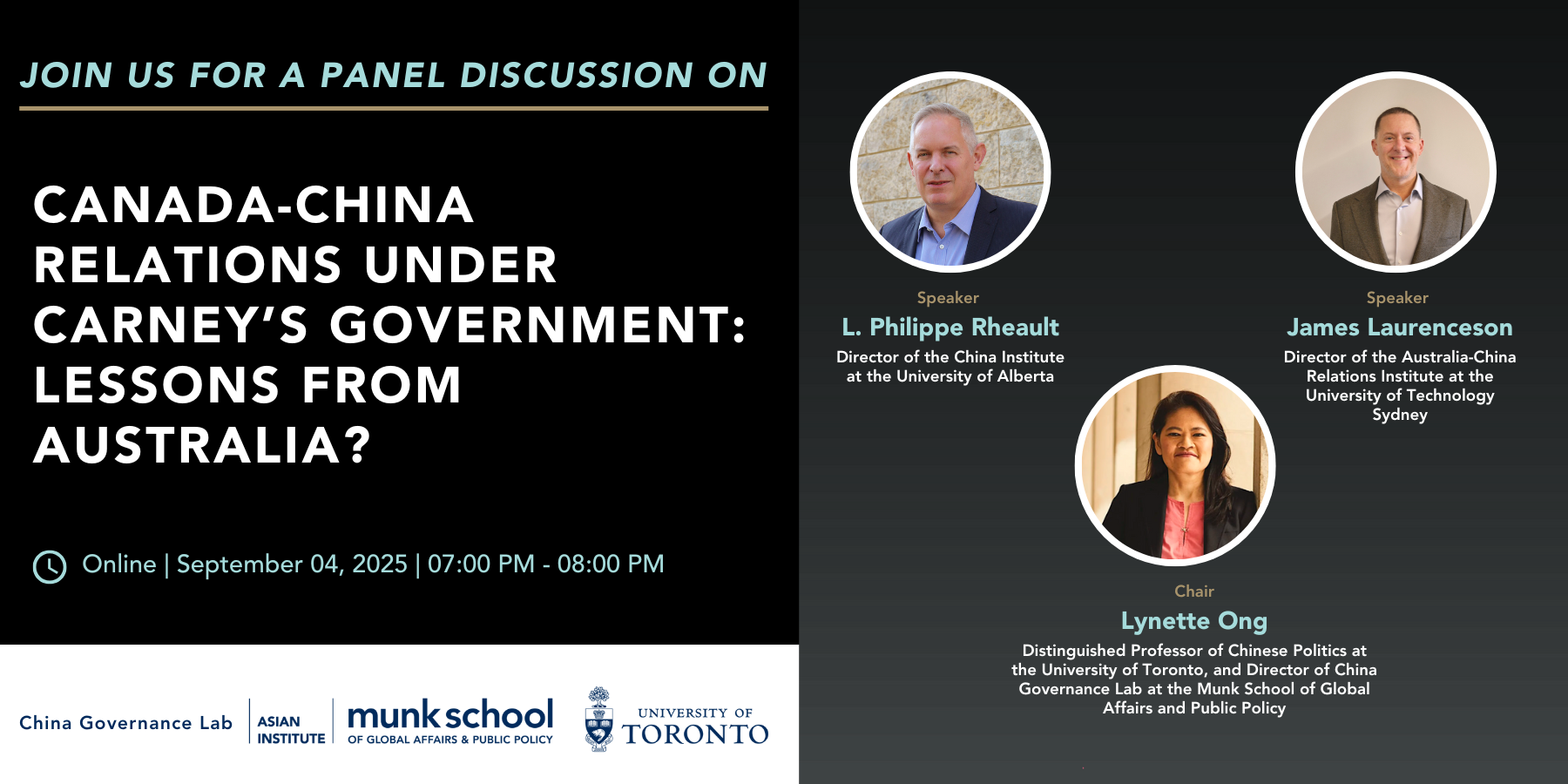
Panel Discussion - Canada-China Relations Under Carney’s Government: Lessons from Australia?
Canada’s foreign relations are at a crossroads. Trump’s re-election has cast tremendous uncertainty over both economic and security partnership to Canada traditionally provided by the US. China that is supposed to provide trade diversification from our overreliance on the US market has proved to be an unreliable trade partner. How should Canada engage or deal with China given the known risks and uncertainty? Should Canada engage with China at all, given its authoritarian nature and record of arbitrary detention? Does these calculation change under Trump 2.0? Can the EU provide a viable alternative to economic diversification and security alliance? Can the Indo-Pacific region provide a counterbalance against potential risks from China? Instead of focusing exclusively on Canada-China bilateral relations, experts from this roundtable will examine these important relations by contextualizing it in the larger context of Canada’s foreign relations with the US, Europe and the Indo-Pacific.
VIRTUAL
Zoom Webinar
7:00 PM - 8:00 PM